Use the final room configuration
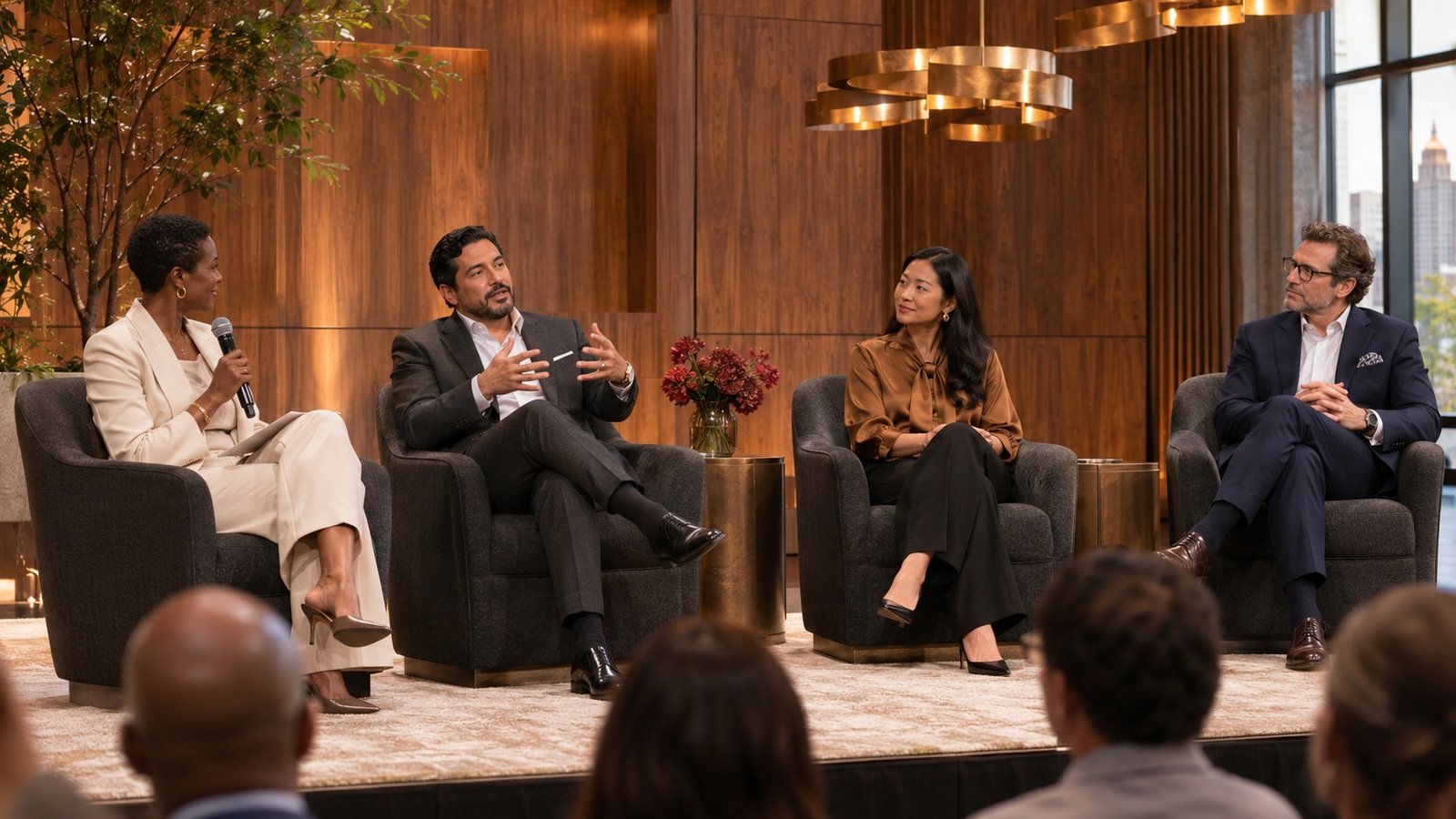
Cobb Energy Performing Arts Centre's official ballroom page identifies the Kessel D. Stelling Ballroom as a 10,000-square-foot room divisible into three sections. It lists a 21-foot ceiling, ground-level loading and audiovisual capability, and describes adjustable lighting. Those facts make the actual event configuration important: a production brief should state which sections are in use and how the program is arranged within them.
This is independent planning guidance from The Portrait Dept based on public venue information. It is not a case study, a record of a commission or a venue endorsement. Confirm current venue requirements, access and event-specific production arrangements directly with your venue contact. The following questions are intended to help you prepare a useful content conversation for your own gathering.
Make the room tell the right story
Begin with what the content should do next. A gala recap may emphasize recognition and relationships. A conference update may need speaker moments and an engaged audience. A partner handoff may need an activation and a planned acknowledgment. Define the primary purpose, then choose a few room images that establish the setting without allowing décor to replace the human story.
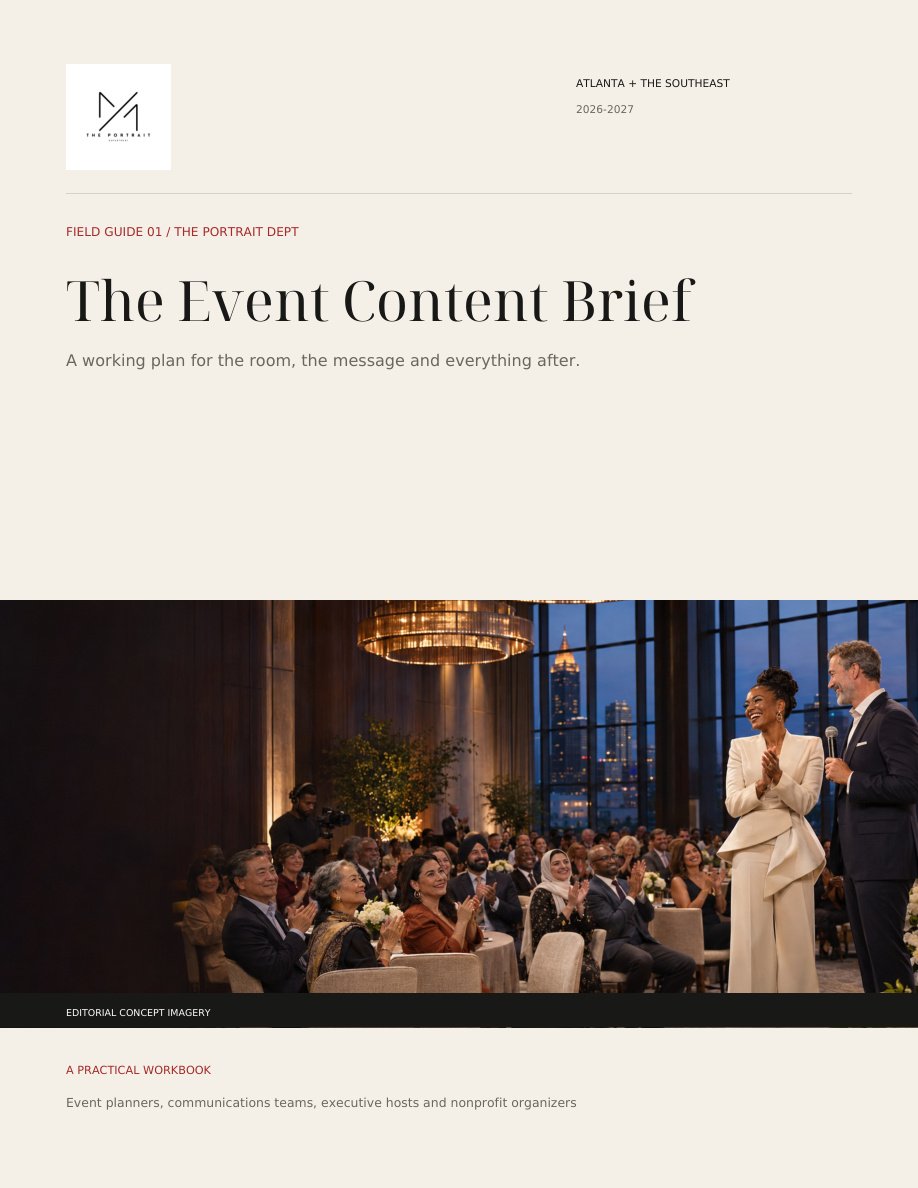
Ask for the final floor plan, including the stage, tables, screens, registration and sponsor locations. Mark any space that changes function during the program. A photograph of an empty room can be valuable before doors open, so include that access in the coverage window when it matters. Once guests arrive, the brief should give attention to welcome, participation and the event's key moments.
Discuss lighting before the program
The official page describes a ballroom with programmable and adjustable lighting. Ask the venue and production contacts how the planned lighting supports both the guest experience and image capture. Share stage changes, presentation moments and any particularly important portraits. Confirm what adjustments are available and who can approve them, rather than assuming the content crew can alter the room on arrival.
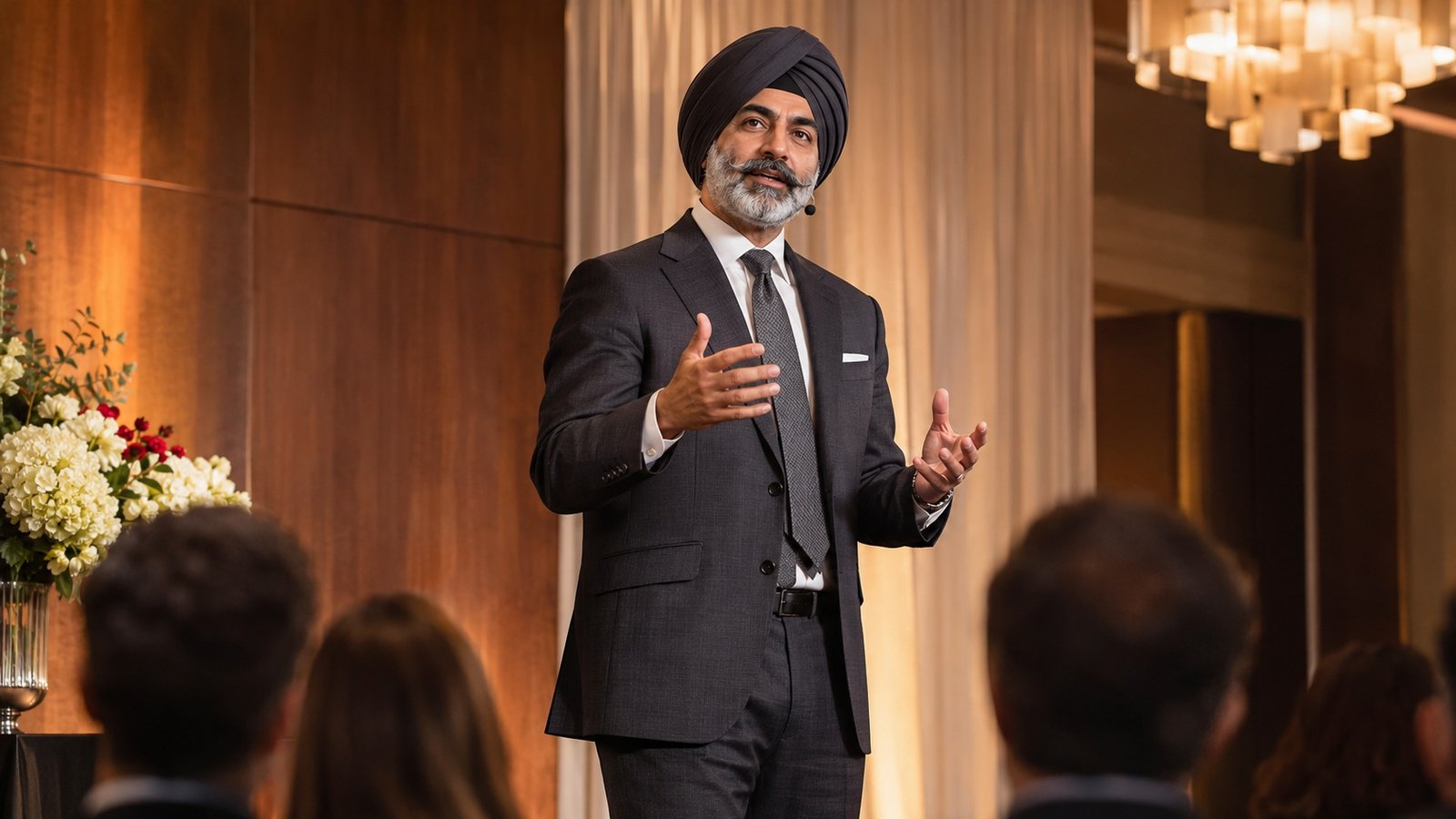
Consider the difference between an atmospheric room and a clear view of a speaker's face. Both may matter to the final story. The production team can discuss camera positions and exposure against the planned setup, but it needs accurate information. Build time for checks within the agreed access arrangements, especially when a full address must be recorded without interruption.
Protect the address and the recognition
If the complete keynote or program is a priority, say so explicitly. A highlight film does not automatically include the full recording. Share speaker timing, introductions, questions and the audio contact. Identify which parts must remain continuous and which can become an edited story. Confirm film lengths, versions, review scope and deadlines in the proposal so later expectations match the production plan.
Recognition moments deserve their own detail. List names, order, presenter and recipient positions, and any group portrait that follows. Ask who can gather the people required. If a sponsor portrait or reception activation happens while a speech is underway, mark the conflict. Extra coverage capacity should be considered against those simultaneous jobs, with the final crew arrangement confirmed in the scope.
Connect loading, movement and guest flow
The venue page lists ground-level loading, but the practical production plan still needs an assigned route, access time and venue contact. Confirm those details for your event and share them with the crew. Include parking, credentials, equipment movement and the time the room must be clear. Do not make the host the only person who can solve an access question during arrivals.
Walk through the guest route on the floor plan. A portrait area or mobile interview position should not obstruct the room's required circulation. If a Headshot Lounge is being considered, discuss space, power, privacy and the queue against the actual program. The guide scopes lounge capacity around guest volume and schedule; a room's size alone does not establish how the experience will operate.
Build the handoff into the brief
Decide who needs the first photographs, what the recap film must communicate and when partner selections should be ready. Assign one receiving owner and one person to consolidate factual corrections or edit feedback. The Portrait Dept confirms delivery in the proposal. Keep previews, full galleries, mobile assets and film dates distinct so an early selection is not confused with the complete delivery.
After delivery, download and back up the photo gallery within its 30-day access window. Keep event context, approved names and usage notes with the files. Bring the final ballroom configuration, run of show, technical contacts and next deadline to the discovery call. Those details turn a venue reference into a content plan that serves the people and message of your event.