Write one purpose everyone can use
An event can have a photographer, a filmmaker and a social content lead yet still lack a shared story. Each person receives a different message, requests a different interview and follows a different priority list. One common brief gives the production a center. Begin with the event's purpose, the audience who needs to see it next and the first date the material must be useful.
Write that purpose in everyday language. For a hypothetical professional gathering, it might be to show prospective members what participation feels like while preserving the speaker's address for current members. That sentence identifies both a story and a complete recording need. It gives each format a role without pretending that one output will satisfy every audience in the same way.
Define deliverables by their jobs
Photography can supply the people, details, recognition and room context. A highlight film can connect those moments into an edited story. A full keynote can preserve the message. BTS Mobile can give the social lead vertical moments and reactions while the energy is fresh. Put each requested deliverable beside its intended use, required format, deadline and reviewer.
This is also the time to remove assumptions. A highlight does not automatically include a complete keynote. Mobile capture does not automatically include live publishing. Several video crops are not the same as an unspecified set of additional edits. Confirm what is included in the proposal so everyone can plan the coverage, edit and approval around the same deliverable list.
Make the schedule carry the priorities
Use the run of show as the shared working document. Mark nonrepeatable moments, audio checks, speaker availability, sponsor obligations and directed portrait windows. Add locations when the event uses several rooms. Flag overlaps clearly. Two simultaneous priorities are a production question, and they need to be considered before the final crew assignment is treated as complete.
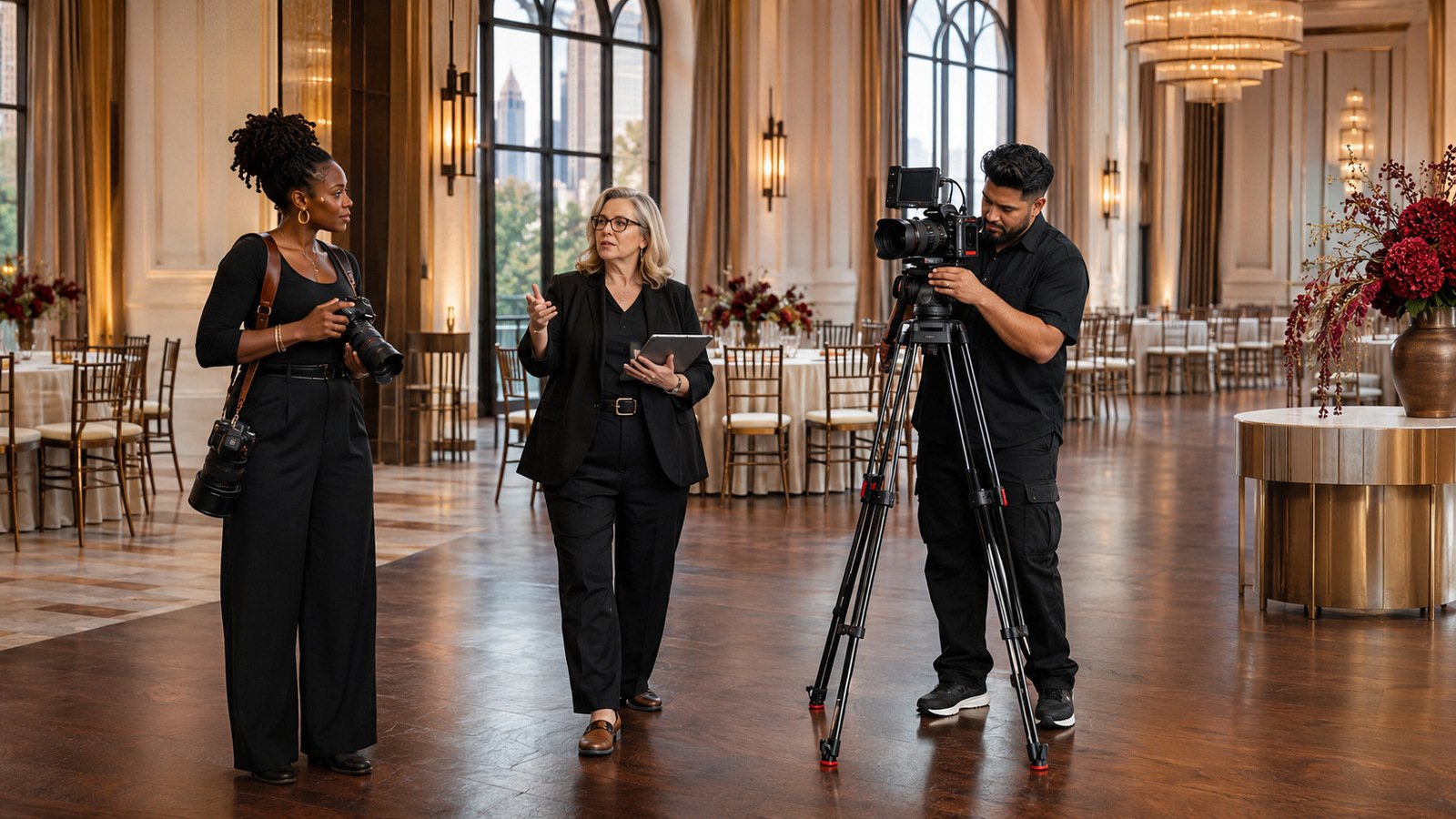
Give each important moment a lead responsibility. During a keynote, one role may preserve the uninterrupted address while photo coverage records the speaker and audience. During a reception, mobile coverage may gather short reactions while the photographer handles a planned host portrait. The exact arrangement follows the scope, but the shared brief should explain what success looks like for that moment.
Collect technical and access decisions once
The team needs consistent information about room access, credentials, load-in, power, camera positions and venue restrictions. Identify the people who can confirm sound connections and stage changes. Share the latest floor plan, not several unmarked versions. A brief becomes more useful when it points to one current schedule and identifies who updates it during the event.
Privacy information also belongs in the shared plan. Share no-photo preferences, sensitive areas and any content that requires review before release. Explain how those needs will be recognized discreetly. If only one operator knows the restrictions, the production is still misaligned. Give everyone the same relevant boundaries and a single organizer contact for questions that arise on the day.
Connect capture to the review process
Decide who can approve early selections and who reviews longer edits. A fast content handoff can stall if five people provide separate notes with different priorities. Name one person to consolidate feedback and ensure factual corrections reach the right editor. Distinguish approval for a photo selection from approval for a film, a caption or a partner distribution request.
Track deadlines separately for previews, galleries, mobile banks, recap films and full recordings. The Portrait Dept confirms the delivery schedule in the proposal; the client guide gives planning targets for several assets. If a same-day need is essential, identify it before production. The team can then discuss the selection and handoff required while the event is still in motion.
Let the collection follow the brief
The Portrait Dept coordinated collections combine complementary roles around a shared plan. Authority is a starting point when full keynote or program capture matters; Launch combines a concise photo and mobile brief; Campaign supports a longer event with several stories. Their published scopes differ. Compare those scopes to the agenda and next uses instead of choosing only by the collection name.
Bring one page to the call: purpose, next audiences, deliverables, agenda, priority people, restrictions, contacts and deadlines. It does not need to be a production manual. It needs to let the team make consistent decisions in a busy room. One brief gives photography, film and social a shared view while allowing each format to do its own work well.